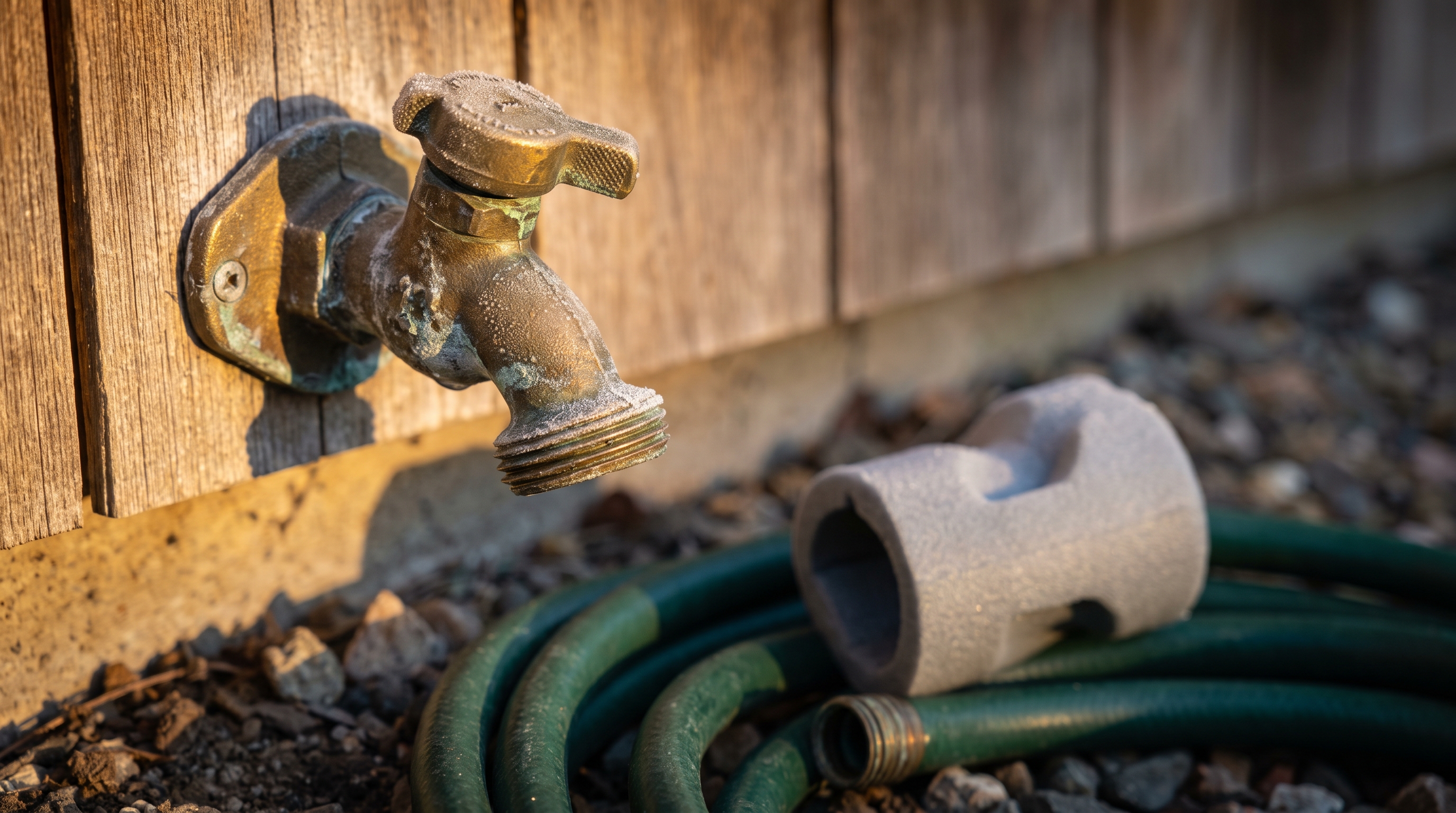
To winterize outdoor faucets, disconnect and drain every garden hose, close the shut-off valve inside the house (usually on the wall directly behind the outdoor faucet), then open the outside faucet so the trapped water drains out. Finish with a cold-weather faucet cover. Frost-free faucets still need the hose removed.
-
Disconnect, drain and store every hose and splitter.
-
Close the inside shut-off valve for each outdoor faucet.
-
Open the outdoor faucet and let the line drain.
-
Cover the faucet, then deal with the sprinkler system.
The first hard freeze came early this year
If your hoses are still connected, this is the week to deal with them. In Central Oregon, the Bend Bulletin reported a freeze warning from 1 to 10 a.m. Saturday, Oct. 10, for Bend, Redmond, Madras, Prineville and surrounding areas, with lows as low as 30 degrees. The paper said that by Monday Bend could dip into the upper 20s, Redmond into the low to mid-20s, and Sunriver into the upper teens.
In eastern Idaho, the National Weather Service office in Pocatello issued a freeze warning calling for "sub-freezing temperatures as low as 29" from 4 to 9 a.m. MDT Tuesday, Oct. 13, across the Eastern Magic Valley, Shoshone/Lava Beds, Arco/Mud Lake Desert and the Lower Snake River Plain. The warning said the cold could "possibly damage unprotected outdoor plumbing." KMVT also reported a frost advisory for the Magic Valley running from midnight Tuesday to 10 a.m. Wednesday, with overnight lows in the low to mid 30s.
Northern Wisconsin got there first. WBAY reported a freeze warning for Northern Marinette County and parts of the Northwoods overnight Oct. 2-3. For this week, Wausau's WSAW forecast calls for cooler weather and a chance of frost later in the week. If you skipped the shutdown after the early-October cold, you still have time to do it.
Why outdoor plumbing fails first
Water left sitting in an outdoor faucet, an attached hose or a buried sprinkler line has no heat around it. When it freezes, it expands, and the pipe or valve holding it can crack. Often you won't see the damage until you turn the water back on in spring.
Frost-free faucets (also called frost-proof sillcocks) help, but only if you use them right. Family Handyman explains that the frost-proof design shuts the water off back at the end of the valve stem, inside the heated part of the house. The catch: "If hoses remain attached, frostproof sill cocks (whether open or closed) may freeze because water can't completely drain out of them." A connected hose can defeat a frost-free faucet.
Step 1, tonight: hoses off (about 10 minutes)
This is the cheapest freeze protection you can get, and it's free. The Onondaga County Water Authority says to "detach and drain the garden hose and store it in a temperature-controlled area." The Bend Bulletin gives the same advice: disconnect garden hoses from outdoor faucets and cover exposed spigots. The City of Madison tells residents to "double-check outdoor hose bibs to make sure all hoses are disconnected and faucets are turned off and drained."
-
Remove hoses, Y-splitters, timers and quick-connect fittings from every spigot.
-
Lay hoses on a slope to drain, then coil them and store them in a garage or basement.
-
Walk the whole house. Side-yard and back-corner spigots are the ones people forget.
Step 2: shut off and drain each outdoor faucet
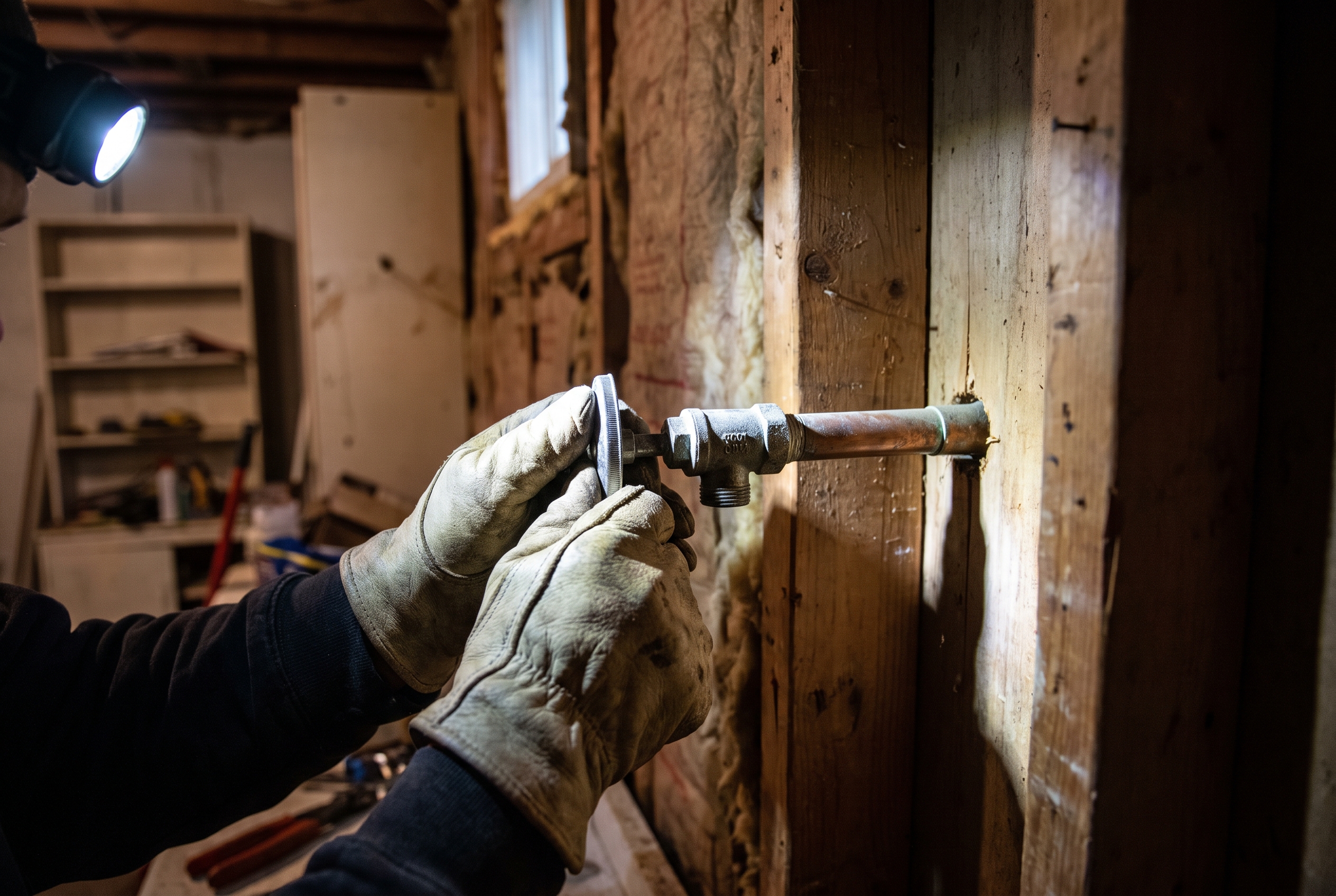
Most outdoor faucets that aren't frost-free have a separate shut-off valve indoors. According to the OCWA, it's "usually... located on the interior wall of the house, directly behind the outside faucet." Look in the basement, crawl space, utility room or a cabinet on that wall.
-
Close the inside shut-off valve.
-
Go outside and open the outdoor faucet by turning the handle counterclockwise. Per the OCWA, "allow any water remaining in the pipe to drain out."
-
For extra protection, the OCWA recommends you "place a cold-weather cover over the faucet." Covers are foam or insulated caps sold at hardware stores.
If you have frost-free faucets and no inside valve: the most important thing is that the hose is off so the faucet can drain. A cover is still a cheap extra layer.
If your old faucets keep giving you trouble: Family Handyman rates replacing one with a frost-proof faucet as a beginner DIY project. It takes about a full day and costs $51-$100. If the job means opening a wall or soldering pipe and you don't want to do that, a plumber can handle it.
Step 3: set up your indoor backup
Outdoor faucets connect to pipes inside the house, so take a few minutes on these too:
-
Find your main water shut-off and make sure everyone in the house knows where it is. The City of Madison puts this near the top of its freeze checklist.
-
Insulate exposed pipes in unheated areas such as crawl spaces and garages, per the Bend Bulletin.
-
Open cabinet doors under kitchen and bathroom sinks on cold nights so warm room air reaches the pipes.
-
Traveling? If you'll be away for a few days, Madison recommends keeping the thermostat at "at least 65 degrees."
-
Never thaw a frozen pipe with an open flame. Madison's guidance is clear: "Call a plumber immediately if you think you have frozen pipes."
Step 4: the sprinkler system
Sprinkler lines run shallow and hold water in pipes, valves, heads and the backflow preventer (the device, usually above ground near the house, that keeps irrigation water from flowing back into your drinking water). There are three common ways to winterize:
-
Manual drain: open the drain valves by hand and let gravity empty the lines.
-
Automatic drain: valves built into the system open on their own when pressure drops.
-
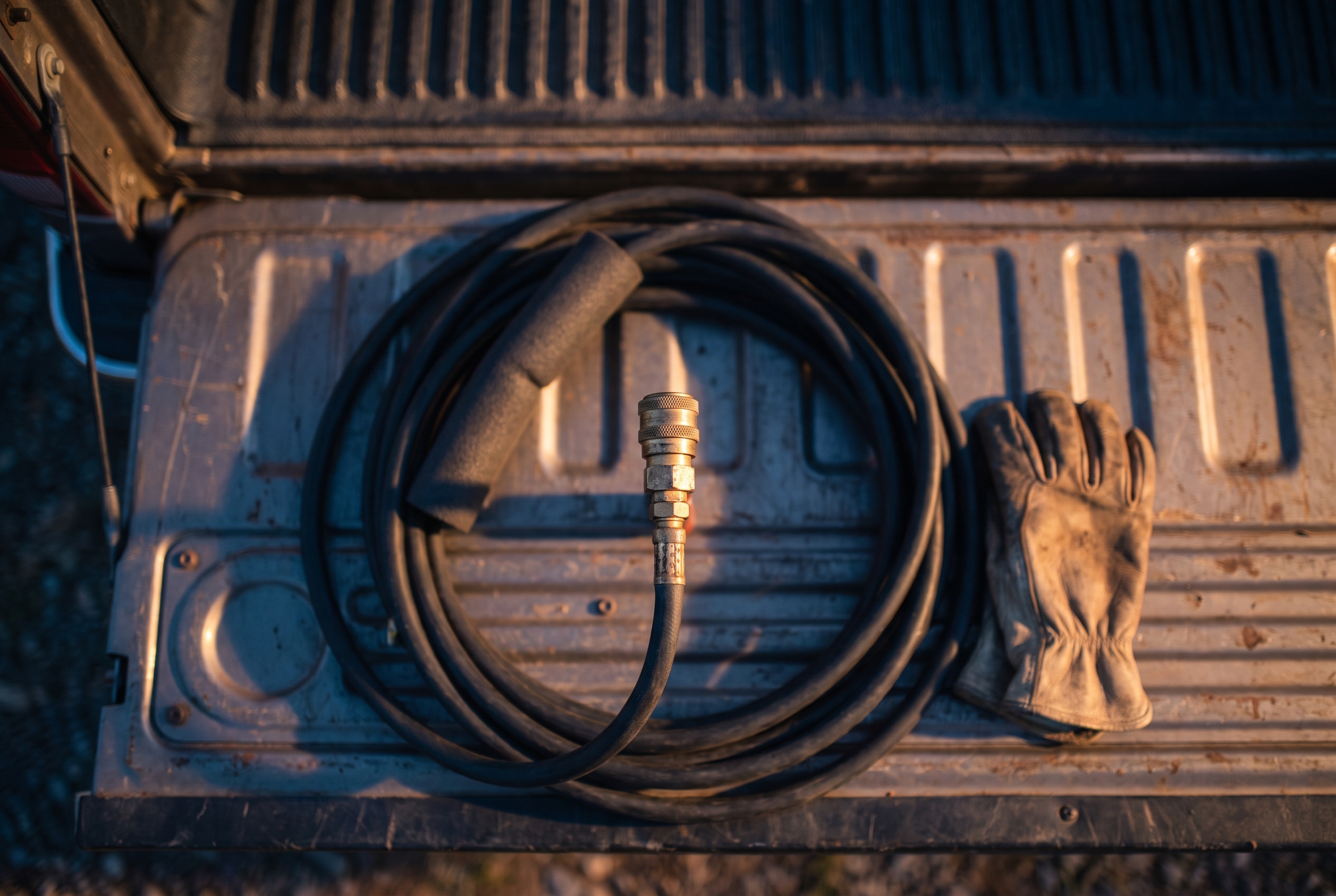
Blowout: an air compressor pushes the remaining water out of each zone. This is the most thorough method and the one most contractors sell in cold climates.
Rain Bird, a major irrigation manufacturer, tells homeowners to "insulate backflow preventers and valves if they are above ground." On blowouts, it says "since there could be potential safety risks we recommend contacting your local irrigation specialist."
What it costs to hire out sprinkler winterization
National pricing from two cost guides lines up fairly closely:
-
Fixr (updated January 2025): national average $100, typical range $75-$150, low end $50, high end $250.
-
Lawn Love (updated December 2025): national average $60-$145.
-
Inch Calculator (2023, older data): typical $60-$125, average $90.
The blowout method costs more than the overall average. Fixr puts it at $100-$250, and Lawn Love at $83.50-$216.50.
Prices by region
| City | Typical winterization price (Lawn Love) |
|---|---|
| Boise, ID | $62-$150 |
| Madison, WI | $63-$153 |
| Colorado Springs, CO | $58-$140 |
Lawn Love doesn't publish a Bend figure. Expect local quotes to fall somewhere in the national ranges above, and get two or three bids to compare.
What changes the quote: zone count
The size of your system matters most. Fixr's pricing by zone:
| Number of zones | Typical cost (Fixr) |
|---|---|
| 1-2 zones | $50-$75 |
| 3-4 zones | $80-$100 |
| 5-6 zones | $100-$130 |
| 7-8 zones | $150-$250 |
Fixr's pricing by method: manual drain $75-$150, automatic drain $90-$175, blowout $100-$250. Many companies also sell a spring startup visit, which Lawn Love puts at $46.50-$141.50. Ask whether they'll bundle fall and spring.
DIY cost: renting a compressor runs about $20 an hour according to Fixr, or $30-$60 total according to Lawn Love.
DIY vs hire: a quick decision guide
-
Hose bibs: DIY. No tools needed, and it takes minutes.
-
Small, simple sprinkler system with manual or automatic drains: often DIY. Read your system's instructions first.
-
Blowout: usually hire. Call an irrigation pro if you don't have a high-volume compressor or don't know your system's layout. Rain Bird recommends a specialist for this job.
-
Exposed backflow device: worth a pro visit if you aren't sure how to drain and insulate it. It's the most expensive part to replace.
-
Frozen or split pipe: call a plumber. Shut off the main water first.
Bend homeowners: there's a local rule
The City of Bend requires backflow assemblies to be tested "at installation, annually, after repairs, and after relocating" by a certified backflow tester. The city notes that "backflow assemblies can break over the winter and should be tested yearly before the irrigation season." You, the owner, have to hire the tester and make sure the results get to Water Services. "The due date for your assembly is on the letter sent to you." To shut irrigation off for winter, the city says to use the isolation valve that feeds the backflow device or turn it off at the device. Questions go to the Safe Drinking Water Program at 541-317-3000, option 2.
That makes your shopping a little different. If a fall winterization crew also holds a backflow testing certification, ask whether they can schedule your yearly test for spring.
What skipping it can cost
You can skip winterizing and still get lucky. When it goes wrong, though, repairs cost far more than the shutdown.
Sprinkler damage (Lawn Love, updated Oct. 2026):
-
Backflow preventer replacement: $356-$1,354, "typically the most expensive repair"
-
Broken pipe repair: $125-$400
-
Valve replacement: $69-$371
-
Sprinkler head: $59-$150
Lawn Love notes that "broken pipes are often caused by water left in the pipes turning into ice during the winter."
House plumbing (Fixr, figures last updated 2022, so today's prices are likely higher):
-
Burst pipe repair: $200-$1,000 nationally, with most people paying around $500 (about $300-$400 of that is labor)
-
Pipe inside a wall: $150-$500
-
Basement or under-slab pipe: $500-$4,500
-
Plumber hourly rates: $45-$200
-
Water damage repair: $1,200-$5,000 on average
Insurance claims: The Insurance Information Institute, citing ISO/Verisk data for 2019-2023, puts the average homeowners claim for water damage and freezing at $15,400. State Farm says it paid more than $628 million on over 20,000 freeze-related claims from 2024 through June 2025, and its average claim payment was more than $30,000.
Who to call and what to ask
-
Irrigation or landscaping contractor: sprinkler blowouts and drains.
-
Plumber: a frozen pipe, a split faucet or a frost-free faucet upgrade.
-
Certified backflow tester (Bend): your required yearly test.
Before you book a sprinkler winterization, ask:
-
Is the price flat or per zone, and how many zones do you count on my system?
-
Which method will you use: blowout, manual drain or automatic drain?
-
Will you drain and insulate the backflow preventer?
-
What does spring startup cost, and is there a discount for booking both visits?
-
Are you licensed and insured, and can you show proof?
Save your local water utility's emergency number too. Madison residents, for example, can reach the Madison Water Utility emergency line at 608-266-4661. If a pipe does freeze, close the main shut-off and call a plumber. Don't wait for it to thaw on its own.
Related reading
-
Can Flooded Hardwood Floors Be Saved After Isaias? What to Dry and What Must Go
-
How to Run an Alabama Contractor License Lookup Before Isaias Repairs
-
Your Water Utility's Letter Probably Says 'Unknown.' That One Word Decides Who Pays.
Sources
-
NWS Pocatello freeze warning, Oct. 12, 2026 (KIFI LocalNews8)
-
Cold weather brings a Frost Advisory and Freeze Warning across the area (KMVT)
-
Freeze warning issued for Central Oregon through Saturday morning (Bend Bulletin)
-
First Alert: Frost and Freeze Alerts in effect for some Friday night (WBAY)
-
Cooler weather starts Tuesday with chance of frost later in the week (WSAW)
-
Prepare Your Home for Freezing Temperatures (City of Madison)
-
How to Install a Frost-Proof Outdoor Faucet (Family Handyman)
-
How Much Does it Cost to Winterize a Sprinkler System? (Lawn Love)
-
Facts + Statistics: Homeowners and renters insurance (Triple-I)
ABOUT THIS SERVICE: CallTheLocal.com is a directory and lead generation service, not a contractor or service provider. Submitting this form does not obligate you to hire anyone or purchase any service. Your information will be shared with licensed, insured home service professionals in your area who may provide quotes for your project. CallTheLocal.com does not guarantee the quality, timeliness, or outcome of any work performed by service providers you connect with through this service. Always verify licensing, insurance, and references before hiring. Get everything in writing before work begins.
Note: This article contains AI-assisted content and has been reviewed by our editorial team.